

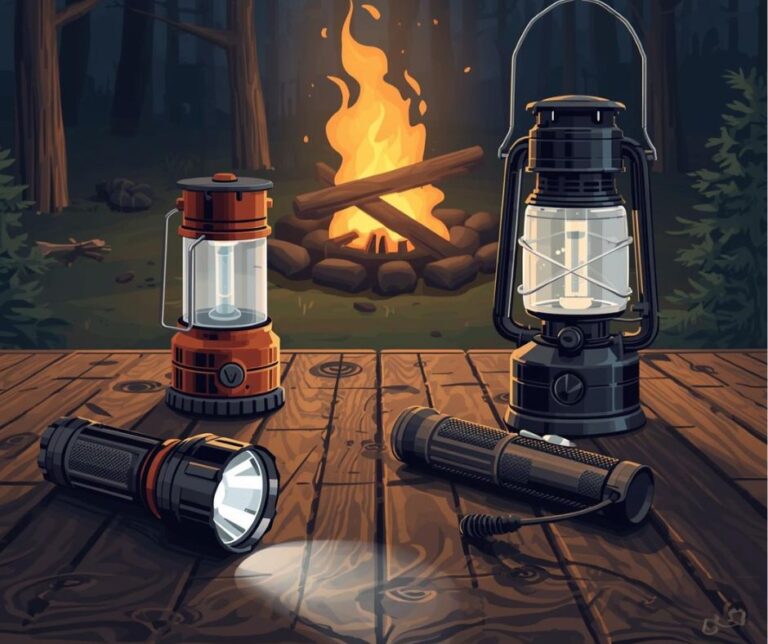
When preparing for emergencies—whether power outages, storms, earthquakes, or roadside breakdowns—good lighting is one of the most essential tools you can have. But with so many options out there, a common question arises: Flashlights vs Lanterns — which is better for emergencies? The short answer: both are useful, but each shines in different situations. Here’s how to decide which is right for your needs.
1. What’s the Difference Between Flashlights and Lanterns?
When comparing flashlights and lanterns for emergencies, the main difference comes down to how they distribute light.
Flashlights produce a focused, directional beam. They’re designed to help you see specific objects or areas, such as a breaker panel, a car engine, or a dark hallway.
Lanterns, on the other hand, provide wide, 360-degree illumination. Instead of lighting one spot, they brighten an entire room, tent, or space.
In short:
- Choose a flashlight for targeted tasks and movement.
- Choose a lantern for lighting up a whole area during power outages or shelter situations.
2. When Flashlights Are the Better Choice
Flashlights are ideal when you need focused, powerful light in a specific direction.
They work best for:
- 🔍 Searching in dark spaces (basements, attics, storage rooms)
- 🚗 Checking under the hood during a car breakdown
- 🚶 Walking outside at night
- 🆘 Signaling for help in an emergency
Because they are compact and easy to carry, flashlights are perfect for grab-and-go emergency kits. Their narrow beam also helps conserve battery power compared to area lights.
If you expect to move around a lot or need precision lighting, a flashlight is the smarter option.
3. When Lanterns Are the Better Choice
Lanterns are best when you need to light up an entire space, not just one spot.
They are especially useful for:
- 🏠 Power outages at home
- 🏕️ Camping or temporary shelters
- 🍳 Cooking during blackouts
- 📖 Reading or group activities
Unlike flashlights, lanterns provide wide, even lighting, making them more comfortable for extended use. They also allow hands-free operation, since they can sit on a table or hang from a hook.
If your goal is to create safe, steady light for a room or shared space, a lantern is the better choice.
4. Key Features to Compare Before Buying
When choosing between a flashlight and a lantern, focus on these important features:
🔆 Brightness (Lumens)
- 100–300 lumens: Good for basic home emergencies
- 300+ lumens: Better for outdoor use or larger spaces
More lumens mean brighter light — but also faster battery drain.
🔋 Battery Type & Runtime
- Rechargeable models: Convenient and eco-friendly
- Replaceable batteries (AA/AAA/D): Easier to swap during long outages
Always check estimated runtime. Longer battery life is crucial in extended emergencies.
💧 Durability
Look for models that are:
- Water-resistant or waterproof
- Shock-resistant
- Made from durable materials
In storms or disaster situations, durability matters just as much as brightness.
Choosing the right features ensures your emergency lighting works when you truly need it.
5. Best Setup for Different Emergency Situations
The right choice often depends on the situation. Here’s how flashlights and lanterns compare in real-world emergencies:
🏠 Home Power Outage
A lantern is ideal for lighting up a room so everyone can move safely.
A flashlight is useful for checking the fuse box or navigating tight spaces.
Best option: One lantern per room + one flashlight per person.
🚗 Car Breakdown at Night
A flashlight is essential for inspecting tires or the engine.
A compact lantern can help if you’re waiting for assistance.
Best option: Bright flashlight with long battery life.
🏕️ Camping or Outdoor Emergency
A lantern lights up the campsite or shelter.
A flashlight helps when walking trails or searching nearby areas.
Best option: Use both for full coverage.
In most cases, combining both tools gives you the safest and most flexible emergency lighting setup.
6. So Which One Should You Choose?
If you must choose only one, think about your most likely emergency scenario.
- If you need mobility, precision, and portability, choose a flashlight.
- If you need steady room lighting for longer periods, choose a lantern.
However, the safest approach is to include both in your emergency kit. A flashlight handles movement and task lighting, while a lantern keeps your space safely illuminated.
In emergencies, lighting is not a luxury — it’s a safety tool. Having the right type (or both) can make a stressful situation much easier to manage.
7. Bonus Tips for Emergency Lighting
To make sure your lighting actually works when you need it, follow these simple tips:
🔹 Store lights in easy-to-reach places — not buried in a drawer.
🔹 Keep extra batteries nearby (or a charged power bank for USB models).
🔹 Test your devices every few months to avoid surprises.
🔹 Avoid relying on phone flashlights — they drain your battery quickly.
🔹 Consider adding a headlamp for hands-free tasks.
A little preparation now can prevent major stress during a real emergency.
8. Final Verdict: Be Prepared, Not Limited
When it comes to emergencies, the question isn’t flashlight or lantern — it’s about being fully prepared.
A flashlight gives you control and mobility.
A lantern gives you comfort and visibility for a wider area.
Relying on just one can limit you. Having both gives you flexibility, safety, and peace of mind during power outages, storms, or unexpected situations.
Smart emergency kits don’t choose sides — they combine tools.
9. Quick Emergency Lighting Checklist
Use this simple checklist to make sure your lighting setup is ready:
☐ At least one flashlight per adult
☐ At least one lantern for main living area
☐ Extra batteries stored together
☐ Rechargeable devices fully charged
☐ Waterproof or weather-resistant models
☐ Easy-to-access storage location
☐ Backup option (headlamp or second flashlight)
A prepared home doesn’t wait for the lights to go out — it plans ahead.
10. Read More About Emergency Preparedness
If you want to dive deeper into keeping your home and family safe during emergencies, check out these helpful resources:
- What to Do First If You Smell Gas at Home – Immediate Safety Steps
- Winter Storm Emergencies in the USA – How to Stay Safe
- 2-Minute Emergency Preparedness Quiz
These guides cover safety steps, checklists, and tips to complement your emergency lighting setup.


0 Comments